
Book Reviews
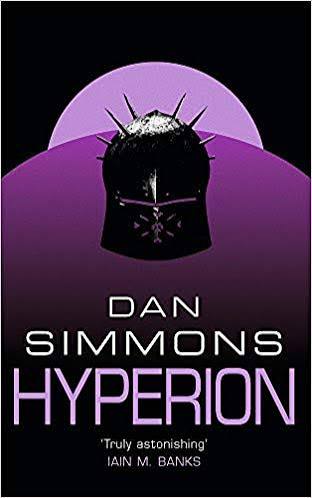 1989's Hyperion by Dan Simmons - 17/08/2026
Nopony told me that the sequel is a second book, a la, a part one; a part two, rather than a 'The Ringworld Engineers' situation. So I feel like I am reviewing half a thing. Half of a very good thing, mind. Hyperion is split into the tales of the travelers to the Shrike on Hyperion, meaning that a majority of the book is delivering its story in retrospect. All of the tales are interesting, rich, and clearly inspired by prior science-fiction tropes, and in some cases, specific writers; see, William Gibson. My favourite tale was that of the Jewish scholar, who's story is tragic and strange, reminding me in concept and scope of some of the better SCP works. Many of the characters tales actually concern a third party, and the people who are on this journey are only on it on behalf, or by the will, of someone else. Though each character is distinct enough for this to not feel muddy or lazy. I am excited to read the second book, and will detail more of my thoughts on the broader world of the book then. Oh and, of course, the Shrike is great. 4/5
 1983's My Search for Warren Harding by Robert Plunkett - 07/08/2026
A delightful book that I had the pleasure of discussing with some friends. I think I liked it more than they did, but it was undeniably fun to recount the strange adventures of Elliot Weiner; our deeply closeted, deepy prejudiced narrator. It is the sort of book I would have loved to listen to the audio of, perhaps while on a road trip with a close friend. 3.5/5
 1930's The Eye by Vladimir Nabokov - 02/09/2026
I should have written this just after book club, but here are my recolelcted thoughts: This books is about identity, and this freaking guy who tries to become this objective observer of reality, but ends up obsessed with this persona he created, which is far from objective, the inciting incident of this, for him, is getting beaten to a pulp and deciding to kill himeslef and shooting himself in the chest but he wakes up in hospital. It's pretty funny, he's extremely oafish and gay. Nabokov seems to be presenting a character who's conscious experience of himself is just clearly really wrong, which is kind of what all of his works are like, to degrees. It seems to be a warning of sorts, of how easy it is to feign this objective persona and slip into this horrible little self-unawareness. At one point he decides that he does not need to have his feelings reciprocated by the object of his affections, as he has already gotten everything he could possibly get from his sense-impression of being in love with her in and of itself, as well as the dreams he has featuring her. And I think there was something in that. It's a very sad thought, I think. Something about the adament refusal to process amorous feelings reminds me of a guy I knew in High School, who was kind of best friends with this girl, though it was clear to everyone else that he harboured feelings for her. Eventually he did ask her out and she denied him. His friends asked him about it, tried to comfort him, but he seemed perfectly content. Upon being asked why, he said it was okay beacause there's a version of him in another universe somewhere that did get with her.
I believe they are still friends. 4/5
 1976's Approaching Oblivion; Short Stories by Harlan Ellison
I think we forget some things about Harlan Ellison, or as he is known today, 'That guy who wrote I have no mouth but I must scream [sic]'. For one, he had a fantastic imagination; for two, he was an incredibly prolific writer, which almost always means that he wrote very very quickly. Which unfortunetely does show in the stories within this book. On the bright side, this book also showcases Ellison's sentimentality, an oft neglected aspect of his work. There is a story here where he revisits his childhood self, thinly veiled, and offers him the empathy he never received. In a way. His works are still largely dark and rough. He pens a secret police officer contemplating the moraity of his place within the system, a la Ferenheit 451, except the mantra that Ellison's character is mulling is a string of racial epiphets. He's a member of the saying slurs police. I'm saying only Ellison would do it like this. A number of stories in this collection slip right out of my head as soon as I read them. He was inventive in a 'wouldn't this be fucked up' kind of way, but many of the stories don't have the same thought or follow-through as his best. Another charming note of this collection is how many times Ellison's stories mention arcologies, indeed Paolo Soleri by name (bragging to no one, but I do own a copy of Soleri's lovely Arcology: The City in the Image of Man).
Contact Me: Sageisjuicy@gmail.com